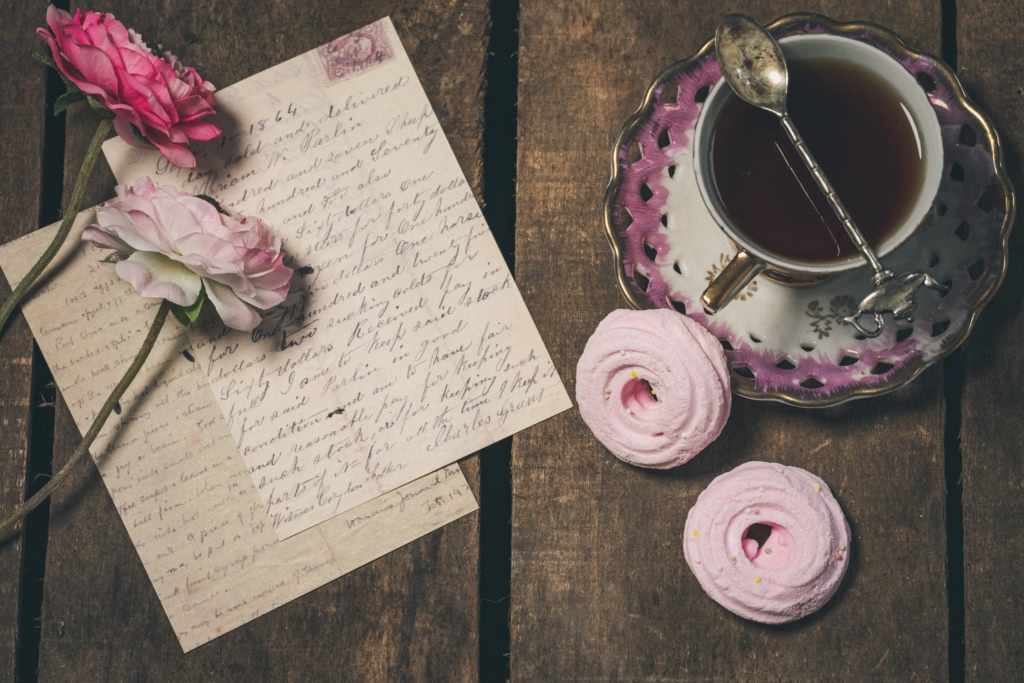

Ever watched a child completely absorbed in a world of their own making? Be it an imaginary tea party with stuffed animals or a daring adventure in the backyard, there is something truly magical about the way children embrace life with open hearts. There’s boundless curiousity, and an unshakable belief in happy endings.
You may want to read the last line again.
For me, writing for children has allowed me to step into this enchanting world where anything is possible. Even if for a little while, it does. I unlock a part of me that often gets buried under the weight of ‘adulthood’, in ways beyond my regular thinking cap.
Viewing Life with No-Judgment Glasses
One of the greatest gifts of writing for children is the ability to see the world through their eyes. They find wonder in the simplest things, like a butterfly fluttering by, a puddle reflecting the sky, or a funny-shaped cloud that looks like a dragon.
While writing for children, I bravely cut the layers of judgment with the sword of confidence, and let my preconceived notions be forgotten like my most hated veggies. I accept people and situations as they are. For a while, I drop my biases or filters and let me tell you, it’s truly liberating.
As adults, we often carry self-doubt and harsh inner critics, but stepping into a child’s perspective reminds us that we don’t need to be perfect to be loved or to tell a great story. We can embrace our quirks, let go of unnecessary fears, and write with a heart full of openness.
The Joy of Being in the Moment
Children live in the ‘now’ naturally. Whether they are giggling at a joke, savouring an ice cream cone, or crying over a scraped knee, they are fully present in whatever they do. On the other hand, whether it is attending calls, cooking a meal, or even going for a walk, being in the moment is our greatest challenge of life as adults, right? But to write for children, I become them. I immerse in the moment rather than constantly worrying about the past or future.
When we write with this mindset, our stories become more vibrant, more alive. We are no longer focused on writing the ‘perfect’ sentence or overanalyzing every plot point. Instead, we let the words flow freely, embracing the sheer joy of storytelling. Writing like this becomes a liberating act, much like a child lost in a world of make-believe.
Easier to Be a Friend and Connect
A child is honest with what he/she feels. That makes it easy for them to make friends. A shared love for a cartoon character or a mutual interest in a music band is enough to form an instant bond. They don’t overthink it. They don’t let differences get in the way.
Studying about their such abilities helps me introspect and reconnect with this innate ability to form connections. Whether I am crafting friendships between two characters of my script or engaging with people my age, I step into a space of pure, unguarded interaction. I realise that deep within, all we are looking for is mutual understanding. Something that should be as effortless and natural as it is for kids on a playground.
Hope and Enthusiasm for a New Day
One of the most beautiful aspects of childhood is the unshakable belief that every new day brings new possibilities. No matter how many times a child falls, they get up again, ready to try once more. Whether it’s learning to ride a bike, making a new friend, or setting off on an imaginary quest, children face each day with enthusiasm and hope.
As a writer, I cultivate this spirit of optimism through children’s literature. It encourages me to believe in fresh beginnings, in the idea that magic can be found in the most unexpected places, and that even the smallest act of kindness or bravery can change the world.
Writing for Children, A Gift to Ourselves
At first glance, writing for children may seem like a task of simplifying language or telling whimsical tales, but in reality, it is much more than that. It is a journey back to joy, a reminder to embrace life with curiosity and kindness, and a way to rediscover the hope that resides within us.
So, if you ever feel weighed down by the complexities of life, try writing a story for a child. You may just find that in doing so, you free a part of yourself—a part that still believes in wonder, laughter, and endless possibilities.