
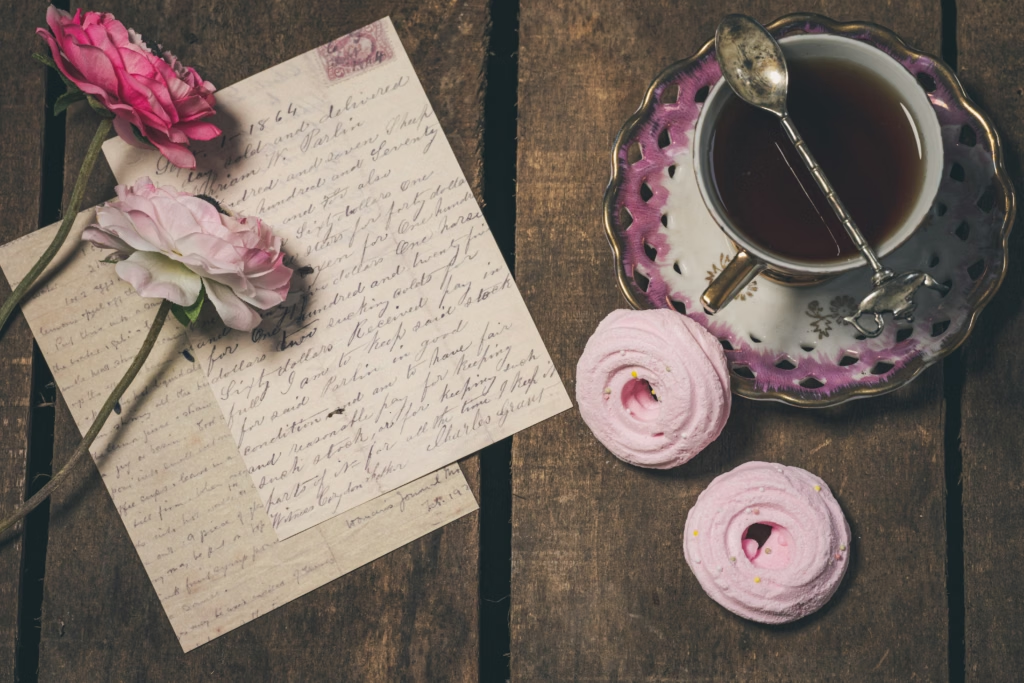
A good love letter does not begin with, What can I say that will impress you? It begins with a much better question:
What would I say if I wanted you to feel seen?
Perhaps that is where love letters and copywriting first meet. Both are, at their heart, acts of attention.
One is written for someone you love. The other is written for someone you hope will care. But neither can afford to be careless with words. Both ask you to look closely at another person, to understand what moves them, what matters to them, what they long for, and sometimes, what they are afraid to admit they want.
The best writing has always understood this. It is not really about the person holding the pen. It is about the person on the other side of the page.
You cannot write beautifully for someone you haven’t noticed
Imagine writing a love letter to someone without knowing anything about them. You might fill the page with beautiful words. You might call them extraordinary, unforgettable, radiant, wonderful. You might tell them they deserve the world.
And still, the letter might leave them cold. Because none of it is really about them.
Good copy has the same problem.
There is a particular kind of writing that sounds impressive while saying very little. It is full of grand promises, polished adjectives and carefully arranged phrases, yet somehow feels strangely impersonal.
The reader can feel that you haven’t really been looking at them.
A love letter becomes intimate through details.
You don’t simply say, I love you.
You remember the way they always order their coffee. The song they play when they cannot sleep. The little crease beside their eye when they laugh. The story they told you once, years ago, that you remembered even though they didn’t expect you to.
Specificity is what makes affection believable. And specificity is what makes copy believable too.
The difference between “We make beautiful furniture” and “A dining table made for the dinners that somehow last three hours” is not merely stylistic.
The second one knows something about the person reading it. It imagines a life. And suddenly, the product has somewhere to belong.
The most persuasive words rarely sound persuasive

A love letter is not a sales pitch. At least, it shouldn’t feel like one. You don’t want to be told why you should love someone. You want to feel something while reading the words.
Good copy works in much the same way.
The moment writing begins to sound desperate to convince us, we become suspicious of it. We can hear the machinery underneath the sentence: Look at this. Believe this. Buy this. Choose us.
But persuasion becomes almost invisible when the writing understands desire.
Instead of saying, This is the most luxurious hotel in the city, it might tell you about waking before everyone else, opening the curtains, and finding the city spread beneath the window in the pale blue of morning.
Instead of saying, Our skincare will transform your routine, it might describe the small ritual of washing your face at night and feeling, for the first time that day, as though the world has finally gone quiet.
The difference is subtle. One tells you what to think. The other gives you something to feel.
And feelings have always been better persuaders than instructions.
A good headline is a little like a first glance
Before a love letter is read, it has to be opened. Before copy is read, it has to earn the first few seconds of someone’s attention.
That is the strange burden placed upon a headline.
It stands at the beginning of everything, asking a stranger to come a little closer.
For the nights you wish never turned into mornings.
Somewhere between leaving and staying.
Your skin remembers what your day forgets.
They create a small question in the reader’s mind.
What does that mean?
And curiosity, like attraction, often begins with the desire to know more.
Good copy remembers that the reader has a life
This may be the most important thing love letters can teach us. The person reading your words has a life beyond the page.
They have somewhere to be. Someone to call. An unfinished email. A bad morning. A song stuck in their head. A thousand small concerns competing for their attention.
They are not sitting around waiting for your brand to speak. So don’t make them work too hard to understand you.
Good writing respects attention.
It does not bury a simple thought beneath five complicated sentences because the writer wants to sound clever. It does not confuse complexity with intelligence. It does not make the reader wade through a paragraph before discovering why any of it matters.
A love letter would never begin by making you solve a puzzle before telling you why it was written. Neither should your copy.
Clarity is not the enemy of beauty.
Sometimes the most beautiful sentence is simply the one that says exactly what it means.
And then there is the matter of voice
You can recognise someone you love by the way they say your name.
You know their particular rhythm. Their strange choice of words. The expressions that belong only to them. You could probably recognise one of their messages without seeing the name at the top.
That is voice. Brands need it too.
Not a collection of fashionable adjectives. Not a list of words a brand is allowed to use. Not a personality manufactured in a meeting room.
A real voice has consistency, but it also has character.
It knows whether to whisper or tease. Whether to be serious or playful. Whether a sentence needs a full stop or a little mischief.
The strongest brands sound like someone. Not everyone. Someone.
And perhaps that is why the brands we remember often feel strangely human. We don’t simply recognise their logos. We recognise their way of speaking.
Like an old love letter, their voice becomes familiar enough that we know who is writing before we reach the end of the sentence.
The right words are not always the prettiest ones

Love has taught us this too.
Sometimes I missed you means more than an elaborate declaration.
Sometimes Come home safe carries more tenderness than an entire page of poetry.
Sometimes the simplest words are the ones that survive. Copywriting is much the same.
Writers can become enamoured with language. We fall in love with cleverness, metaphors, rhythm, unusual words and sentences that make us pause admiringly at our own handiwork.
But the reader does not owe us admiration.
The sentence has a job. And sometimes that job is simply to make someone understand. The perfect word is not necessarily the most beautiful word. It is the word that belongs there.
Perhaps that is why great copy feels intimate
At its best, copywriting creates the illusion of a private conversation.
Not a company speaking to an audience. Not a brand addressing a demographic. One person speaking to another.
It says:
I know what you’re looking for.
I understand why it matters.
I have something that might make your life a little better.
And then, importantly, it steps back. Because the finest love letters do not demand an answer. They offer something honest and leave room for the other person to feel. Perhaps that is the real secret of writing that moves people.
You cannot force affection.
You cannot manufacture connection by piling beautiful words on top of one another.
You can only pay attention.
Notice more. Listen better. Choose your words carefully. Remember who you are speaking to. And then write as though there is a real person on the other side of the page. Because there is.
Maybe that is what copywriting has in common with love letters after all. Both are attempts to cross a distance with nothing but words. Both ask us to believe that language can make a stranger pause.
Look closer. Feel something. And, just for a moment, think:
This was written for me.