
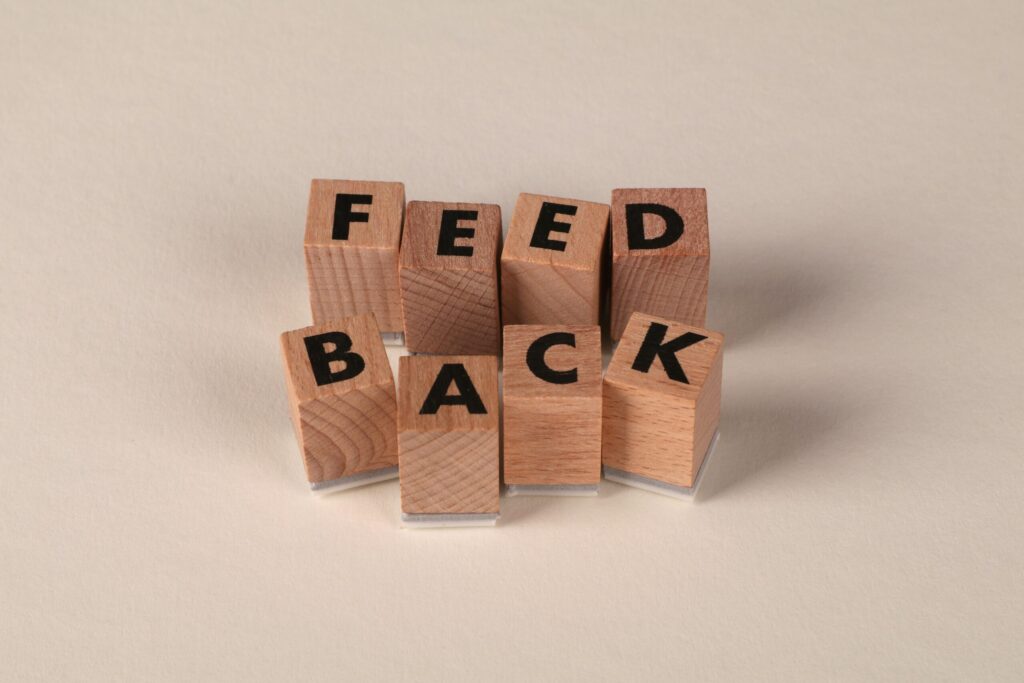
Somewhere between “Can we make it sound better?” and “Can we tweak this a bit?”, feedback gets a bad reputation.
It’s blamed. Meme-ified. Occasionally feared.
But here’s the truth no one likes to admit: Client feedback isn’t the problem. Misalignment is.
Feedback is just a symptom. The real issue starts much earlier at the brief stage.
The Illusion of Alignment
Most projects begin on a high. There’s excitement to get started, lots of ideas around a brief, maybe even a “this is going to be amazing” moment.
But underneath that enthusiasm, there’s often a dangerous assumption:
“We’re on the same page.”
Spoiler: you’re usually not.
Because while the client is thinking “make it better,” you might be thinking “simplify it.”
While they mean “fun,” you’re interpreting “quirky.”
While they say “keep it simple,” they might actually want “make it easy to understand but still impactful.”
Same words. Different meanings.
And that gap? That’s where feedback is born.

Feedback Is Just Translation in Disguise
When a client says:
“Can we make it more engaging?”
What they often mean is:
“This doesn’t feel right yet.”
When they say:
“It’s not working.”
They might actually be saying:
“This isn’t what I had in mind, but I can’t fully explain it.”
Feedback, in most cases, is not rejection.
It’s translation—from thoughts to words, from expectations to execution.
The problem is, we treat it like criticism instead of decoding it like a message.
The Real Culprit: Unasked Questions or Too Many Questions Asked
Misalignment thrives in silence.
- When the brief is taken as-is
- When “target audience” is just a line in a doc
- When tone words are accepted without examples
- When no one asks, “What does ‘better’ actually mean to you?”
We move fast, assuming clarity will come later.
It doesn’t.
Instead, it shows up as endless feedback loops.
Then, there’s classic misunderstanding – why are there so many questions? Didn’t we explain this in the brief?
So What Actually Works?
Alignment isn’t a one-time thing. It’s ongoing.
It looks like:
- Breaking down vague words into real meaning
- Sharing the thinking, not just the final output
- Helping the client see the why, not just the what
Because when clients understand the thinking, feedback becomes clearer, quicker, better.
And a lot less frustrating.
Let’s Be Honest
Good feedback doesn’t ruin good work. Misalignment does.
When everyone is actually aligned, feedback feels less like back-and-forth and more like fine-tuning.
Like getting something closer to right and not starting over every time.
At Copylove, we don’t try to avoid feedback. That’s not realistic.
We focus on reducing confusion before it turns into feedback.
Because when alignment is clear, everything else gets easier.
And suddenly,
“Can we tweak this a bit?”
feels like progress and not pressure.